
What Is Human Design? Your Energetic Blueprint Explained

If you've spent any time in wellness or spiritual spaces online, you've definitely run into Human Design. Usually attached to something like: "I'm a Generator, and everything finally makes sense."
Maybe you looked up your type and felt something quietly click. Or maybe it still sounds like a made-up language and you're not sure what any of it actually means for your real life. Both are valid places to be, and honestly, both are good reasons to keep reading.
Here's where I land on it after my time working with this system: Human Design is one of the most practically useful self-knowledge frameworks I've ever come across.
Not because it's magic (though parts of it do feel a little like that), but because it gives you incredibly specific language for things you've probably been feeling your entire life without knowing how to describe.
What Human Design Actually Is
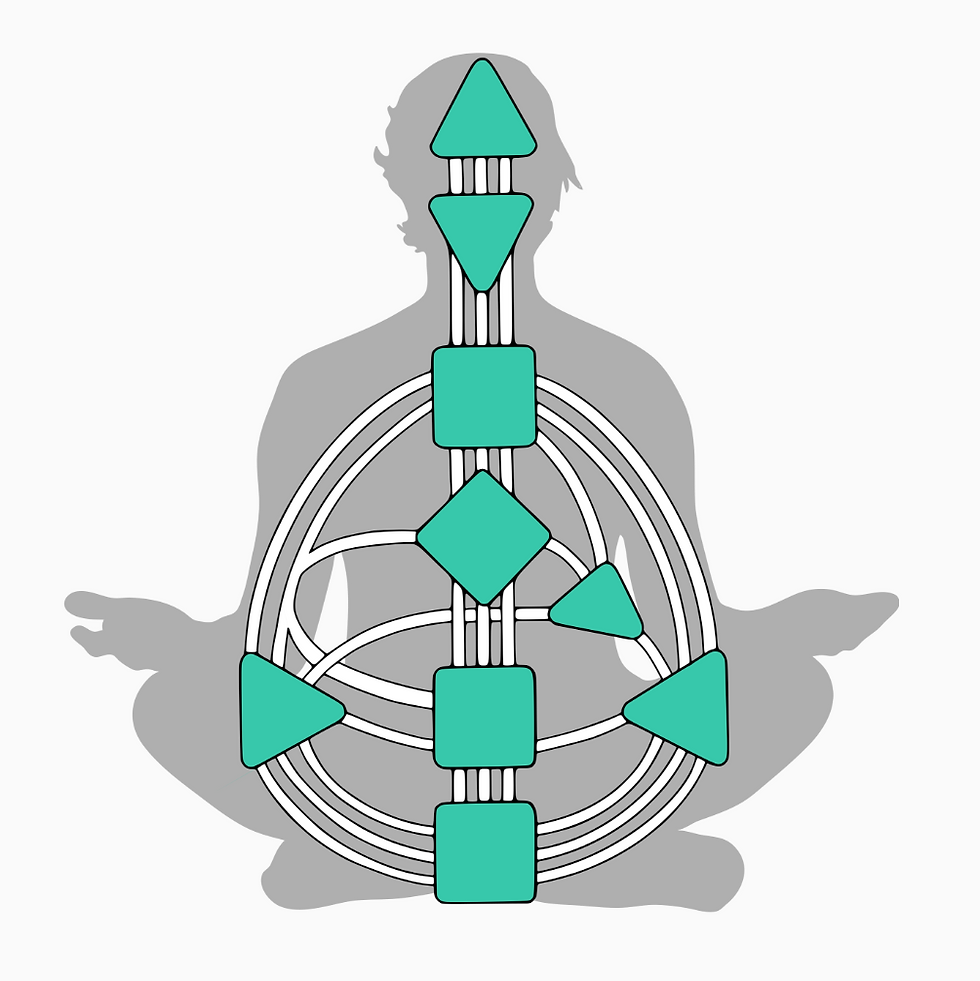
Human Design is a self-knowledge system that maps your unique energetic makeup through something called a Bodygraph, essentially a chart of how energy moves through you. It was developed in 1987 by Ra Uru Hu, and it synthesizes a set of sources that have no business working together as well as they do: Astrology, the I Ching, Kabbalah, Quantum Physics, and the Chakra System.
Your chart is calculated from your birth date, time, and place. What comes back is a visual diagram showing which energy centers in your system are defined (consistently active) and which are open (variable, influenced by the people and environment around you), based on that information. This is your design.
It's not a personality test. It's not a horoscope. The closest thing I can call it is an energetic blueprint, a map of how you were literally designed to function so you can stop working against your own nature, which, it turns out, takes an enormous amount of energy.
The Five Human Design Types
The first thing your chart tells you is your Type, and there are five. This is the part where people either go "oh wow" or stare at the screen wondering what any of it means, so let's make it human.
Generators are the most common type, making up about 70% of the population when you count Manifesting Generators. They have consistent, sustainable life-force energy, a real engine, but only when they're pointed at things that actually light them up. A Generator grinding through obligations and things that don't resonate isn't lazy or broken; they're just pointed in the wrong direction. The Generator's whole practice and goal is learning to respond to life rather than push through it.
Manifesting Generators are a Generator subtype, but they operate faster, jump between interests more readily, and are genuinely designed to skip steps and find their own unconventional path through things. If you're an MG who's spent years feeling like you're doing life "wrong" because you can't stay focused on one thing, that frustration has a name now.
Projectors don't have the same consistent access to life-force energy that Generators do, and the biggest mistake Projectors make is trying to keep up as if they do. Their gift is seeing, whether it's people, systems, or patterns, with unusual clarity and depth. But that gift needs to be invited to work well. Projectors who push and initiate without invitation tend to exhaust themselves and get overlooked. The ones who wait for genuine invitations find that doors open in ways that feel almost effortless. The waiting is the hardest part, and it's also the whole point.
Manifestors are here to initiate. They have an energetic independence that the other types simply don't have, the capacity to start things, move things, make things happen without needing external cues or permission. The friction that tends to follow Manifestors usually comes from not informing the people around them before they move. It sounds almost too simple, but the act of letting people know what they're doing changes the energetic dynamic completely.
Reflectors are the rarest type, about 1% of the population, and they work differently from everyone else. Without consistent energy of their own, they sample and reflect the energy of the people and environments around them, which makes them extraordinarily sensitive barometers for the health of a community. Reflectors are designed to take a full lunar cycle, about 28 days, before making significant decisions. In a culture that rewards decisive and fast, this is genuinely countercultural. It's also extremely important.
Strategy and Authority: The Two Practical Tools
Knowing your Type is the entry point. Strategy and Authority are where the system actually becomes useful in your daily life.
Your Strategy is the how... it's the energetic approach that keeps you in alignment with your Type. Generators respond. Manifestors inform. Projectors wait for the invitation. Each Type has a different way of moving through the world that creates less resistance and more flow.
Your Authority is your personal decision-making mechanism. And this is the piece that tends to genuinely surprise people: it's not your mind.
Depending on your chart, your Authority might be a gut-level yes or no in your body (Sacral Authority), emotional clarity that only arrives after you've let a feeling move through its full wave (Solar Plexus Authority), a split-second physical knowing (Splenic Authority), or something else. The consistent principle across all of them is this: your mind is excellent at analysis, synthesis, pattern recognition. It's not designed to make your decisions. That job belongs somewhere in your body.
When people start actually working with their Authority instead of overriding it with logic, things tend to shift in ways that are hard to explain and hard to ignore.

Where This Fits in the Bigger Map
Human Design is an Insight tool, here we use it as a framework for self-understanding, a way of getting language around patterns that may have been running your life quietly for years.
But understanding your Type intellectually doesn't automatically change anything. Practice is where that understanding becomes something you can actually feel, learning to locate your Authority in your body, noticing in real time when you're in alignment and when you're not. And Integration is where you take all of that and build your actual life with it: your schedule, your relationships, how you make decisions when things get hard and the stakes are real.
Human Design is one map. A genuinely useful one. But it works best when it's in conversation with everything else, your astrology, your gene keys, your body, your lived experience. These systems aren't separate; they're different lenses on the same thing. Your astrology chart and your Human Design chart, read together, tell you something that neither one tells you alone.
If you're curious what that looks like in practice, the Astrology and Human Design Integration Session is exactly that, both charts, read as one complete picture.

Comments